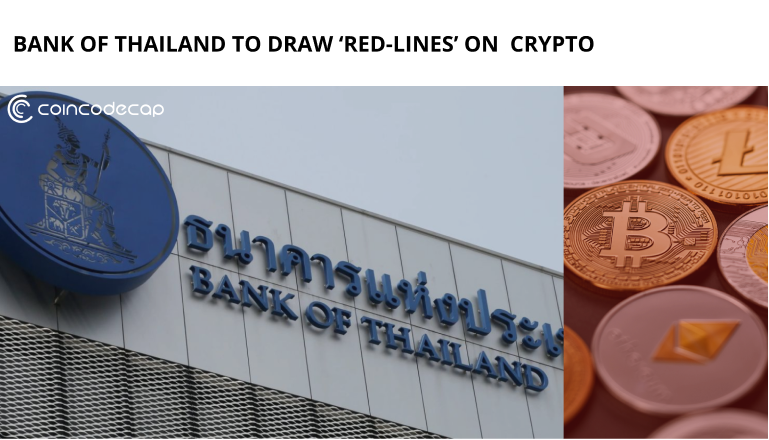
The Bank of Thailand is looking to trace large USDT transfers as part of its efforts to tackle illicit finance, money laundering and “gray money” in the country.
The central bank will closely working alongside the country’s Securities and Exchange Commission(SEC) on this crackdown.
Under this, the Bank of Thailand will soon require people depositing THB 5 million ($150,000) or more in cash to verify the source of funds and engage in full disclosure.
The drive will involve auditing high-volume stablecoin transactions, primarily USDT, cash transactions and currency exchanges, to identify and stop illicit financial flows.
As per local media reports, Governor Mr Vitai Ratanakorn said the measures form part of a broader drive to shut criminal networks out of the banking system while confronting deep structural weaknesses that continue to constrain the country’s long-term economic growth.

“The measures we are implementing are not short-term fixes; they require the continuous deployment of multiple parallel strategies,” the Governor said.
The crackdown will expand commercial bank compliance duties across cash networks, currency exchanges, gold bullion trading and “suspicious stablecoin transactions” to prevent regulated entities from facilitating corruption or shadow economies, local media outlets reported.
A gray economy consists of legal market activities and transactions that are deliberately concealed from government authorities to avoid taxation, labor regulations, or licensing requirements.
Thailand’s decision to zero in on USDT specifically reflects growing regulatory unease across Southeast Asia about the token’s role in facilitating cross-border financial crime.
USDT remains the most widely used stablecoin in over-the-counter(OTC) markets throughout the region, often changing hands through informal trading desks that operate with little to no compliance infrastructure. This makes it an attractive channel for criminal networks seeking to move large sums without triggering the reporting requirements that apply to conventional banking transactions.