⚠️ Affiliate Disclosure: CoinCodeCap may earn a commission if you sign up through links on this page. This never affects our ratings — our editorial team tests every card independently. Read our full disclosure.
TapX Crypto Card Review 2026: Self-Custody, 70+ Cryptos, 0% FX Fees
TapX Card solves a real problem: you’ve got crypto, but spending it in everyday life still feels clunky. TapX fixes that — it converts your crypto balances into a usable Visa/Mastercard debit card with 0% FX fees, self-custody architecture, and Apple Pay/Google Pay support. No cashback yet, but the utility-first pitch is compelling for traders who just want it to work.
| Feature | Details |
|---|---|
| ⭐ Rating | 3.9 / 5 |
| Best For | Crypto-native everyday spenders, DeFi users, travelers |
| Network | Visa / Mastercard |
| Annual Fee | Free |
| FX Fee | 0% |
| Custody | Self-Custody |
| Cashback | Coming soon |
| ATM | Varies by plan |
| Mobile Pay | Apple Pay & Google Pay |
| Supported Assets | BTC, USDT, 70+ cryptocurrencies |
| Availability | Global |
Key Takeaways
- TapX Card is a self-custody crypto debit card — you control your private keys while spending anywhere Visa or Mastercard is accepted.
- It supports BTC, USDT, and 70+ cryptocurrencies, giving it broader asset flexibility than most competing cards that restrict to stablecoins only.
- 0% FX fees on international transactions make it strong for travelers and cross-border spenders.
- No annual fee, no sign-up bonus, and cashback is on the roadmap but not yet live. The pitch is pure utility — straightforward spending access.
- Physical and virtual card options with tier-based spending limits. Exact limits vary by plan — verify in the app before committing.
How We Review Crypto Cards
Our team applies for real cards, tests spending flows, and verifies all fee data from official sources. We evaluate cards both as everyday spending tools and as investment products — because the fee structure often determines real-world value more than headline features.
| Criteria | Weight | TapX Score |
|---|---|---|
| Fees & Costs | 30% | 4.2 / 5 |
| Security & Custody | 25% | 4.3 / 5 |
| Supported Assets | 20% | 4.2 / 5 |
| User Experience | 15% | 3.8 / 5 |
| Rewards & Cashback | 10% | 2.0 / 5 |
| Overall | 100% | 3.9 / 5 |
What Is TapX Card?
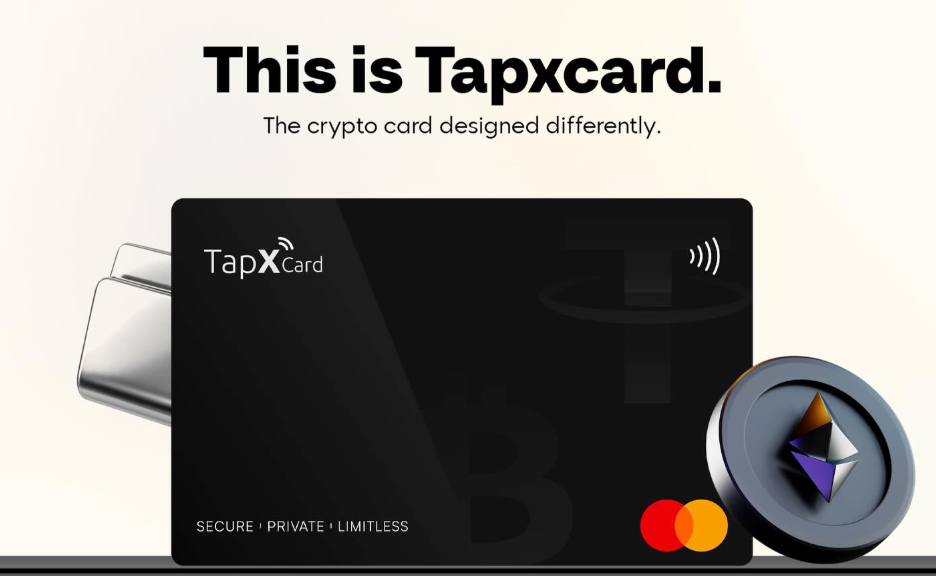
TapX Card is a crypto-linked debit card positioned in the “utility-first” category. It’s not chasing luxury branding or oversized reward claims. Instead, it focuses on a clean spend flow: load crypto, use the card at any standard merchant, and move on. Self-custody architecture means your funds stay under your control — the card doesn’t require parking assets in a centralized exchange.
TapX Card Features
Self-Custody Architecture
TapX is presented as a self-custody card product — you retain control over your private keys rather than handing them to a centralized custodian. For crypto-native users who don’t want to trust an exchange with their funds just to get card access, this is a meaningful differentiator. It separates TapX from fully custodial alternatives like Crypto.com or RedotPay.

Visa and Mastercard Network
Dual Visa/Mastercard network support is one of TapX’s core strengths. It means the card works at essentially any merchant, online checkout, or payment terminal globally — not just crypto-friendly shops. For everyday payments, network coverage matters more than most bonus features.
70+ Cryptocurrencies Supported
TapX supports BTC, USDT, and 70+ additional cryptocurrencies for card spending. This gives it flexibility for users with diversified crypto portfolios — you’re not locked into spending only stablecoins. The breadth here is notably wider than cards like Tuyo (USDC-only) or some exchange-linked cards with narrow asset lists.
0% FX Fees
Zero foreign exchange fees on international purchases is a genuinely valuable feature for travelers and cross-border users. While many competitors charge 1-1.75% on non-domestic transactions, TapX eliminates this cost entirely. Over a month of international spending, this adds up meaningfully.
Physical and Virtual Card
Both virtual (for online payments, subscriptions, mobile wallet) and physical (for in-store purchases) cards are available. Google Pay and Apple Pay support turns the card into a tap-to-pay tool for everyday use. Tier-based spending limits apply — check your specific plan’s limits in the TapX app before committing to high-value purchases.
Cashback — Coming Soon
Cashback is on the TapX roadmap but not yet live. The card is currently a pure utility play — no rewards program, no points, no token incentives. If and when cashback launches, the card’s value proposition strengthens significantly. For now, judge TapX on its spending utility, not future rewards.
💡 Expert Tip: TapX’s 0% FX fee is its best feature for real-world savings. If you travel regularly or make cross-border purchases, this alone can save more money than any cashback program from a card charging 1.5-2% FX markup. Calculate your FX exposure before choosing a card — the math often favours zero-FX cards for high-travel users.
TapX Card Fees
| Fee Type | Amount |
|---|---|
| Annual Fee | Free |
| Sign-Up Bonus | None currently |
| FX Fee (international) | 0% |
| Cashback | N/A (coming soon) |
| ATM Withdrawal | Varies by plan |
| Staking Requirement | None |
TapX’s fee structure is intentionally simple. The headline is a free annual fee — no recurring cost to keep the card active. The 0% FX fee is the standout practical benefit. Exact top-up fees, conversion spreads, and ATM withdrawal terms vary by tier — always review your plan details in the app for the full cost picture before transacting.
TapX Card Pros & Cons
| ✅ Pros | ❌ Cons |
|---|---|
| Free annual fee — no recurring cost | No active cashback program yet |
| 0% FX fees — excellent for travelers | No sign-up bonus |
| Self-custody architecture — you hold your keys | ATM terms vary by plan (check in-app) |
| 70+ cryptocurrencies supported | Tier-based limits add complexity |
| Visa AND Mastercard support (dual network) | Full fee stack needs in-app verification |
| Apple Pay and Google Pay compatible | Cashback roadmap timeline unclear |
| Physical + virtual card options | No sign-up incentive vs cashback-heavy rivals |
TapX Card vs Competitors
| Feature | TapX Card | Ready Card | Fiat24 Card | RedotPay |
|---|---|---|---|---|
| Network | Visa/Mastercard | Mastercard | Mastercard | Visa |
| Custody | Self-Custody | Self-Custody | Hybrid | Custodial |
| Cashback | Coming soon | 0.5% | None | None |
| Annual Fee | Free | Free | Free | Free |
| FX Fee | 0% | 0% | Varies by tier | 1.2% |
| ATM | Varies by plan | $200/month free | N/A (virtual only) | 2% fee, global |
| Assets | 70+ cryptos | BTC, ETH, USDC | ETH, USDC, USDT | BTC, ETH, USDT, USDC, SOL |
Who Should Use TapX Card?
✅ Who It’s Best For
- Crypto-native traders who want quick card access without a complex setup or staking requirement
- International spenders and travelers who benefit from 0% FX fees on every overseas purchase
- DeFi users who prefer self-custody and don’t want to park funds in a centralized exchange card
- Multi-crypto holders who want to spend from 70+ assets, not just stablecoins
- Users testing crypto cards for the first time — free annual fee lowers the commitment barrier
❌ Who Should Avoid It
- Users who need active cashback right now — TapX has none yet
- Anyone who wants a strong sign-up bonus to justify switching
- Users needing predictable ATM access — limits vary by plan and need in-app verification
- Non-crypto users — this is built for existing crypto holders, not fiat-first users
How to Get Started with TapX: 5-Step Guide
- Download the TapX app — available on iOS and Android
- Complete KYC — identity verification is required for card access
- Choose your plan — review tier limits in the app to pick the right spending level
- Load your crypto — transfer from your self-custody wallet; 70+ assets supported
- Activate your card — add to Apple Pay or Google Pay for instant tap-to-pay access
💡 Expert Tip: Because TapX uses self-custody, your assets remain on-chain until you spend. Load only what you plan to spend soon — this keeps you earning any on-chain yield elsewhere while maintaining card spending access. Don’t pre-load large amounts that will sit idle with no yield.
TapX Card Frequently Asked Questions
Is TapX Card self-custodial?
Yes. TapX is positioned as a self-custody card product — you control your private keys and funds are not held by a centralized custodian. This is a key differentiator from custodial cards like RedotPay or Crypto.com.
Does TapX Card have cashback?
Not yet. Cashback is on the TapX roadmap but is listed as “coming soon” with no confirmed launch date. The card’s current value is in its utility — 0% FX fees, 70+ crypto support, self-custody, and Visa/Mastercard coverage.
What are TapX Card’s fees?
The annual fee is free, and FX fees on international transactions are 0%. ATM withdrawal terms and conversion fees vary by plan tier. Always review your specific tier’s fee schedule in the TapX app for the complete cost picture.
How many cryptocurrencies does TapX support?
TapX supports Bitcoin, USDT, and 70+ additional cryptocurrencies for card spending — considerably broader than cards limited to stablecoins or exchange-linked assets.
⚡ Bottom Line: TapX Card wins on function. Self-custody architecture, 70+ crypto support, 0% FX fees, and Visa/Mastercard dual network coverage make it one of the most practically useful crypto spending cards available in 2026. It’s not a rewards card — there’s no cashback yet and no sign-up bonus. But if you want a card that simply works, fits your crypto lifestyle, and doesn’t hide costs in a rewards maze, TapX is a very strong option. When cashback launches, it could become one of the top cards in this category.
⚠️ Risk Disclaimer: Crypto card fees and features may change. Always verify current terms in the TapX app. This is not financial advice.