Free TradingView Pine Scripts give traders massive variety and flexibility, while premium suites like LuxAlgo and Indicator Vault promise cleaner signals, smarter automation, and a more polished experience.This comparison breaks down Free vs. Paid: TradingView Pine Scripts vs. LuxAlgo vs. Indicator Vault to see whether premium indicators truly outperform free ones.
Table of Contents
TradingView Pine Scripts vs. LuxAlgo vs. Indicator Vault: Overview
What are TradingView Pine Scripts?
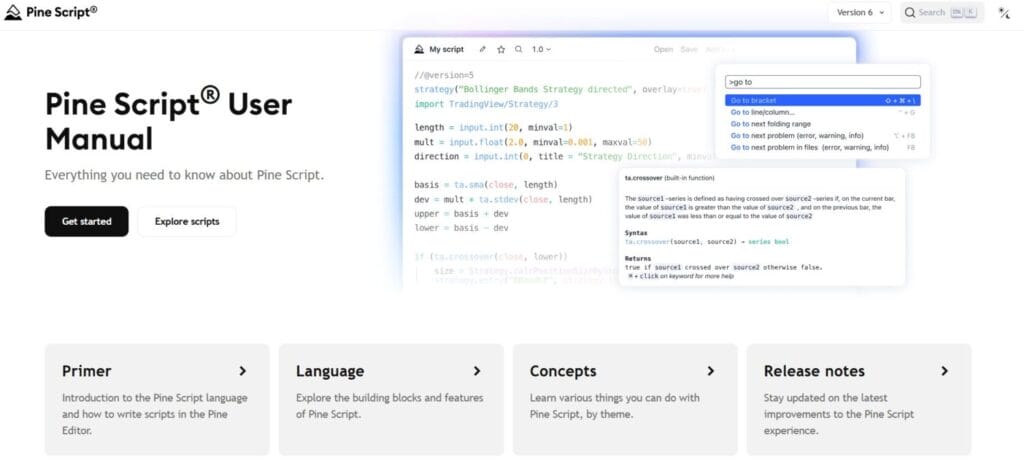
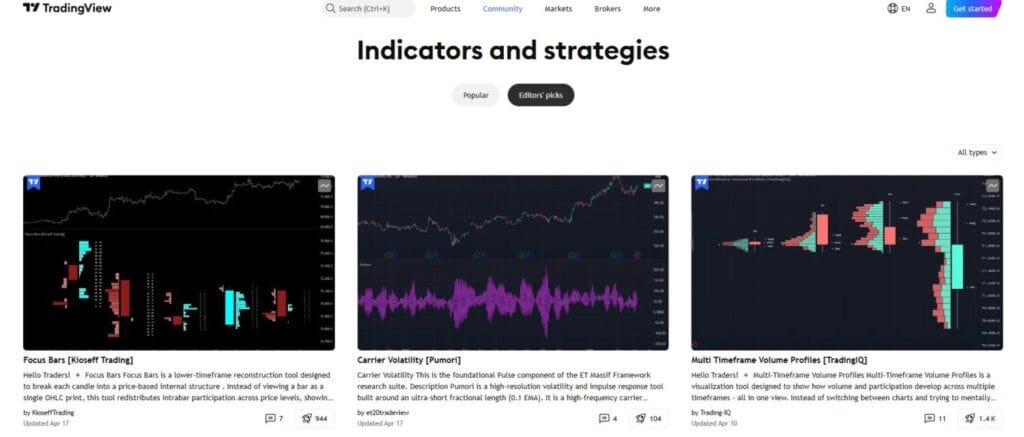
TradingView Pine Scripts represent the broadest and most flexible side of the indicator market because they include both custom-built tools and a huge library of community-published scripts. For traders comparing LuxAlgo vs free TradingView indicators or searching for free SMC indicators on TradingView, Pine Script is usually the starting point since it gives access to thousands of free trend, momentum, market structure, and Smart Money Concepts tools.
The upside is variety, customization, and low cost. The downside is that quality control is inconsistent, so traders often need to test multiple scripts before finding something reliable. TradingView says Pine Script powers its built-in indicators and that its community has published more than 150,000 scripts, with many open-source options available.
What is LuxAlgo?
LuxAlgo positions itself as a premium indicator and strategy platform rather than just a single paid script. Its offering is built around advanced indicators, screeners, backtesting tools, documentation, and newer AI-assisted features for building or refining trading tools. That makes it central in comparisons like Indicator Vault vs LuxAlgo and are paid trading indicators worth it, because LuxAlgo’s pitch is not only better-looking signals but a more complete research and execution workflow. According to LuxAlgo’s official pages, it offers advanced trading indicators, AI backtesting, and an AI tool called Quant for generating and validating Pine Script-based indicators and strategies.


What is Indicator Vault?
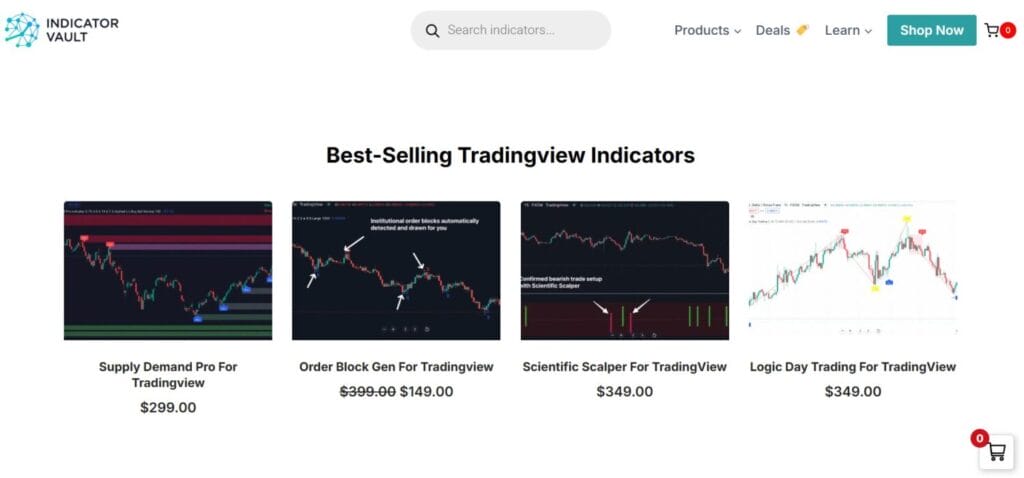
Indicator Vault is a premium indicator brand focused on proprietary trading tools and custom indicator development, with messaging centered on helping traders analyze charts more effectively through specialized pattern-recognition and momentum-style tools. In the Indicator Vault vs LuxAlgo discussion, Indicator Vault comes across as more indicator-product focused, while LuxAlgo leans more toward a broader platform ecosystem.
Indicator Vault says its team has over 10 years of experience coding technical indicators, including work across platforms like MetaTrader and NinjaTrader, and it markets next-generation custom indicators for traders looking beyond basic free scripts. For traders asking are paid trading indicators worth it, Indicator Vault fits the case where someone wants purpose-built premium tools instead of digging through large pools of free TradingView scripts.
TradingView Pine Scripts vs. LuxAlgo vs. Indicator Vault: Key Features
TradingView Pine Scripts
• Highly customizable framework: TradingView Pine Scripts are ideal for traders who want to build, modify, and fine-tune indicators based on their own logic rather than rely on fixed tools.
• Massive script library: One of the biggest advantages is access to a huge ecosystem of community-created scripts, including trend tools, oscillators, strategy templates, and free SMC indicators on TradingView.
• Strong for experimentation: Pine Scripts work well for traders who like testing different ideas, combining multiple indicators, and adjusting settings to match specific markets or timeframes.
• Good for strategy development: They are not just for chart overlays. Many Pine Scripts are built for backtesting and strategy logic, which makes them useful for traders who want to evaluate setups before risking capital.
• Quality varies widely: The main downside is inconsistency. Some free scripts are excellent, while others are poorly coded, overfitted, or visually impressive but not practically useful.
• Best suited for independent traders: Free TradingView indicators are strongest for traders who value flexibility, low cost, and direct control over how their tools behave.
LuxAlgo
• More polished than typical free indicators: LuxAlgo is built for traders who want a premium, ready-to-use experience instead of manually sorting through large numbers of free TradingView scripts.
• All-in-one workflow focus: Its appeal goes beyond a single signal tool because it combines indicators, screeners, alerts, backtesting-related features, and workflow support in one ecosystem.
• Cleaner signal presentation: LuxAlgo is designed to make chart interpretation easier through visual clarity, structured setups, and more organized signal delivery than many free indicators provide.
• Built for efficiency: Traders comparing LuxAlgo vs free TradingView indicators often look at time savings, and LuxAlgo stands out by reducing the need to test dozens of scripts manually.
• Useful for systematic traders: It is especially relevant for traders who want structured decision support, stronger chart organization, and a smoother research-to-execution process.
• Best suited for traders who want convenience: LuxAlgo fits traders willing to pay for a more refined experience, especially if they value usability, support, and a broader premium toolset.

Indicator Vault
• Focused on proprietary indicators: Indicator Vault is more centered on giving traders access to custom premium tools rather than offering an open-ended scripting environment like Pine Script.
• Ready-made trading tools: It appeals to users who prefer prebuilt indicators for setups such as trend identification, breakout analysis, momentum reading, or supply and demand interpretation.
• Less technical effort required: Traders do not need to search through hundreds of community scripts or build custom logic themselves, which makes it more approachable for those who want direct plug-and-play usage.
• Premium-tool alternative to free scripts: In the paid trading indicators discussion, Indicator Vault represents the option for traders who want specialized tools without the clutter and inconsistency of free indicator libraries.
• More product-focused than platform-focused: Compared with LuxAlgo, Indicator Vault appears more concentrated on individual indicator offerings rather than building a full research and execution ecosystem.
• Best suited for traders who want simplicity: It fits traders who prefer proprietary tools with a straightforward setup and do not want to spend time customizing or screening free TradingView indicators.
TradingView Pine Scripts vs. LuxAlgo vs. Indicator Vault: Pricing
| Platform | Pricing Model | Current Pricing | What You’re Paying For |
| TradingView Pine Scripts | Mixed model: many scripts are free, but advanced usage often depends on a TradingView subscription | TradingView offers a Basic free tier, then paid plans including Essential at $12.95/mo, Plus at $28.29/mo, Premium at $56.49/mo, and Ultimate at $199.95/mo, shown as billed annually on its pricing page. Some real-time exchange data requires separate paid market data subscriptions. | Charting access, alert capacity, more indicators per chart, more historical data, and stronger Pine Script/backtesting usage inside the TradingView ecosystem. Many Pine Scripts are free, but platform limits matter if you want to scale usage. |
| LuxAlgo | Subscription platform | LuxAlgo’s official materials currently reference a Free plan at $0, Premium at $39.99/month, and Ultimate at $59.99/month. Its pricing page confirms plan-based subscriptions and a 30-day money-back guarantee, with Free, Premium, and Ultimate tiers repeated across official pages. | A polished premium toolkit with advanced signals, alerts, oscillator tools, and higher-tier access to AI Backtesting and strategy validation features. |
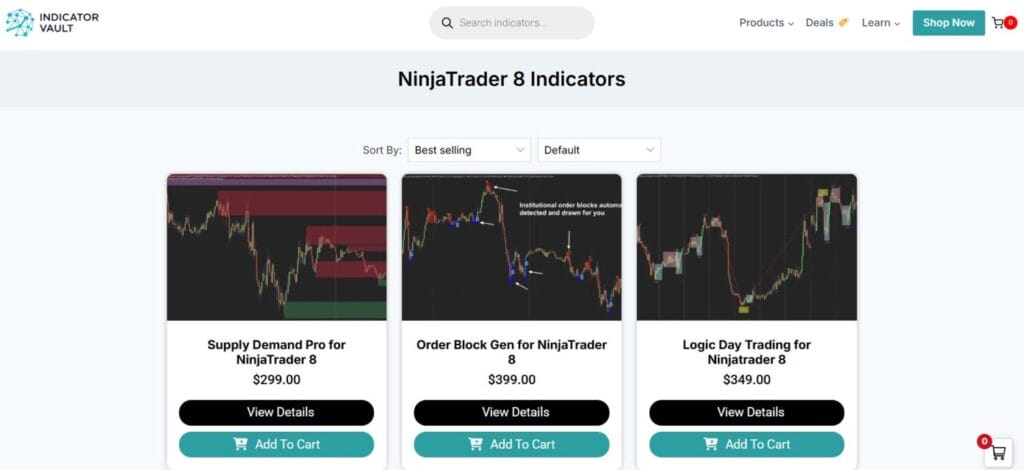
| Indicator Vault | Product-by-product purchases or all-inclusive membership | Indicator Vault’s official shop shows individual TradingView indicators commonly priced from $79 to $399, with examples such as Natural Momentum at $79, Supply Demand Pro at $299, Scientific Scalper at $349, and Order Block Gen at $399. It also offers a TV Champ membership at $2,697/year or $5,997 lifetime. | Proprietary ready-made indicators or bundle-style access through membership. This is more of a premium indicator shop model than a broad charting platform subscription. |
TradingView Pine Scripts vs. LuxAlgo vs. Indicator Vault: Comparative Analysis
| Comparison Factor | TradingView Pine Scripts | LuxAlgo | Indicator Vault |
| Core model | Open and highly flexible scripting ecosystem inside TradingView, with a large library of community scripts and custom strategy-building capability. | Premium trading toolkit built around structured indicators, alerts, automation workflows, and AI backtesting. | Proprietary indicator shop and membership model focused on ready-made TradingView tools rather than an open scripting framework. |
| Best strength | Maximum customization and access to a huge range of free and open-source indicators. TradingView states the community has published more than 150,000 scripts, with many open-source. | Better for traders who want a polished, all-in-one workflow instead of manually testing random free indicators. LuxAlgo emphasizes synced alerts, automation routing, and AI-assisted backtesting. | Better for traders who want plug-and-play proprietary tools for specific setups like momentum, supply-demand, reversals, and breakout-style analysis. |
| Customization level | Highest. Traders can build, edit, combine, and backtest their own indicators and strategies directly in Pine Script. | Medium. LuxAlgo is more configurable than many fixed indicators, but it is still a structured premium system rather than a blank-canvas scripting environment. | Lower. Indicator Vault is mainly about buying finished tools, not deeply customizing logic from scratch. |
| Ease of use | Lowest for beginners because quality varies widely and traders often need to test many scripts to find reliable ones. TradingView’s scale is a strength, but it also creates noise. | Strong for users who want cleaner signals and less setup friction. LuxAlgo is explicitly positioned as an integrated platform for chart analysis, alerts, and strategy testing. | Fairly easy for traders who prefer direct, specialized tools without browsing large public script libraries. |
| Backtesting and strategy development | Very strong. TradingView says Pine Script strategies simulate trades across historical and realtime bars for backtesting and forward testing. | Strong. LuxAlgo promotes AI Backtesting and test-synced live alerts as a major part of its value proposition. | Limited relative to the other two. Indicator Vault is more indicator-product focused than research-platform focused from its current official materials. |
| Who it suits most | Traders who want flexibility, coding control, experimentation, and access to free TradingView indicators or free SMC indicators on TradingView. | Traders asking whether paid trading indicators are worth it because they want convenience, structure, and a more complete premium workflow. | Traders who want proprietary signal tools without spending time building or validating scripts themselves. |
Do Premium Indicators Actually Beat Free Ones?
Not automatically. Premium indicators do not inherently beat free ones in raw trading performance. What they more often beat is friction. Free TradingView Pine Scripts give traders enormous variety, customization, and access to a huge open ecosystem, with TradingView stating that its community has published more than 150,000 scripts and that many are open-source.
The tradeoff is inconsistency. Free tools vary widely in code quality, logic, usability, and maintenance, so the trader has to do much more filtering and validation. That is where premium products try to win.
LuxAlgo and Indicator Vault are better understood as packaged workflows or proprietary toolsets, not magic performance engines. LuxAlgo’s official materials emphasize structured features, backtesting, and workflow support, but its own disclosures also state that past performance does not guarantee future results and that simulated results have important limitations.
Indicator Vault similarly sells proprietary indicator collections and memberships, which can save time for traders who want plug-and-play tools instead of testing public scripts one by one. Regional platforms such as WazirX and CoinDCX in India, Kraken in the US, Luno in Nigeria, and Upbit in South Korea all integrate with TradingView charts, so the choice between free Pine Scripts and paid suites applies regardless of where traders execute.
TradingView Pine Scripts vs. LuxAlgo vs. Indicator Vault: Conclusion
The debate around free versus paid indicators is less about price and more about process. Free TradingView Pine Scripts give traders unmatched variety, flexibility, and room for experimentation, which makes them attractive for self-directed users who are comfortable testing and refining their own setups. Premium tools like LuxAlgo and Indicator Vault, on the other hand, aim to reduce that workload by offering more polished signals, structured workflows, and ready-made indicator suites.
That does not mean premium indicators automatically produce better trading results. In most cases, they improve convenience more than they improve edge. A strong free indicator used with discipline and proper risk management can outperform an expensive premium tool used blindly. Premium indicators become worth paying for when they save time, reduce noise, improve chart clarity, and fit a trader’s workflow better than free alternatives. So the real winner is not the most expensive tool. It is the one that aligns best with the trader’s strategy, experience level, and execution style.
Frequently Asked Questions
Is LuxAlgo better than free TradingView indicators?
Do premium indicators actually beat free ones?
Not by default. Premium indicators may beat free ones in usability, packaging, and efficiency, but they do not automatically create a better trading edge. The trader’s system and discipline still matter more.
Who should choose Indicator Vault?
Indicator Vault is best for traders who want proprietary ready-made indicators and prefer buying specialized tools instead of searching through community-built free scripts.